


Longitude by Chronometer
In the 1720s, John Harrison, a young carpenter from Lincolnshire, England, designed and built precision pendulum clocks using bimetallic pendulum rods whose lengths were impervious to temperature changes.
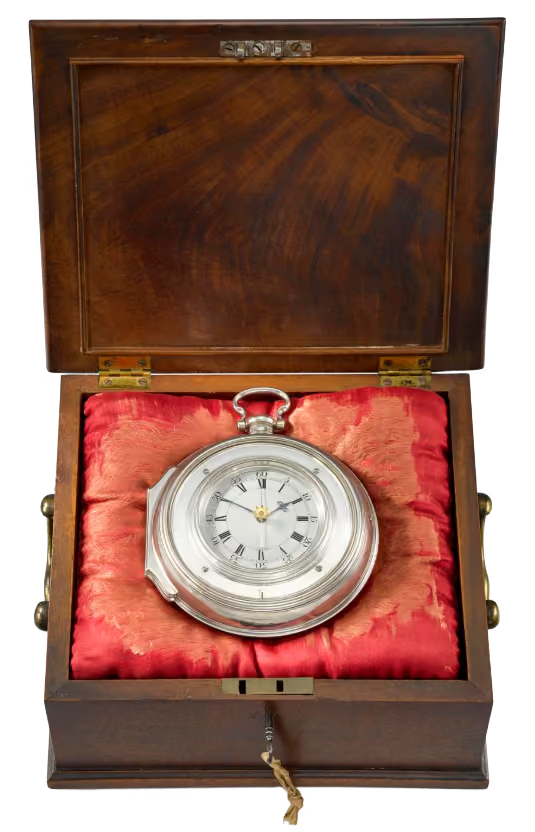
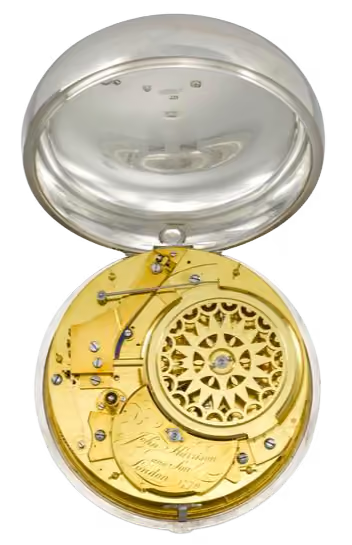
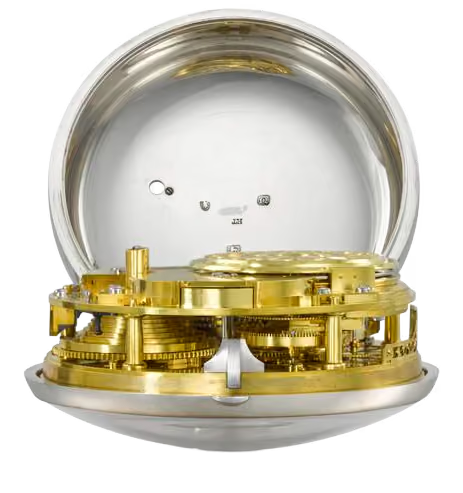
He committed himself to the Longitude Act challenge and eventually, after many years of development and encouragement from supporters in London, and some success with smaller pendulum clocks, Harrison created his fourth timekeeper in 1759: a large watch he named 'H4,' whose balance beat more quickly and with larger oscillations than typical watches, making it more reliable on rolling ships under sail. Preliminary tests showed that time set on H4 at the Prime Meridian at the onset of a voyage would reliably advance on shipboard during lengthy voyages. In 1770 at age 77, he finalized his design with his fifth and last timekeeper known as H5, which helped him secure the last part of his Longitude prize money.
[See "H5 Nautical Chronometer at right => ]
From the fifteenth century onward, as European sailing ships made longer and longer voyages and international trading networks expanded, navigation at sea using accurate charts and instruments became increasingly critical. This meant being able to pinpoint the ship's latitude and longitude on a reliable chart.
For latitude, a range of instruments had been devised over the centuries that measured the maximum height of the sun or the pole star above the horizon. Longitude - the east-west position on Earth - however, often relied on sightings of land and any natural or man-made features visible as signposts, with little help on the open ocean.
Rulers of countries with active navies looked for ways to hasten solutions for the longitude problem using financial incentives, starting with Spain in 1567. In England, the British Longitude Act of 1714 was passed by Parliament, promising a reward equivalent to £1.5 million today to the discoverer of a method "practicable and useful at sea" of determining longitude at sea. By then, mathematicians, astronomers, and mariners had researched several potential solutions and found them theoretically viable but impractical on board a ship.
Methods of determining longitude developed in the late 1700s generally progressed along two paths:
1) using chronometers to find the difference of time at the Prime Meridian in Greenwich, England (Greenwich Mean Time) — longitude was 0° at Greenwich — and the local time at the ship's current position . Convert the time difference into an angle, one hour of time difference being equivalent to 15° of longitude;
2) using instruments to measure the moon's position relative to certain of celestial bodies, then charts and mathematical lists to provide computational data.
Robert FitzRoy, R.N., captain of H.M.S. Beagle on its second expedition 1831 to 1836, determined to successfully complete a chain of longitudinal calculations around the world, outfitted the Beagle with twenty-two marine chronometers — eleven provided by the Admiralty, six purchased at his own expense, and five loaned by their makers. Each chronometer was mounted on gimbals to keep it level in all sea conditions, and the whole assembly fixed inside a hinged wooden box for protection. For additional protection, they were stored in sawdust in a special cabin in the Captain's quarters.
At the end of the four-year nine month voyage, the Beagle arrived at Greenwich on October 28, 1836. The eleven chronometers that remained in working order onboard — some had broken or loaned to other surveys during the voyage — were checked against Greenwich Mean Time. After almost five years at sea they were only thirty-three seconds off !

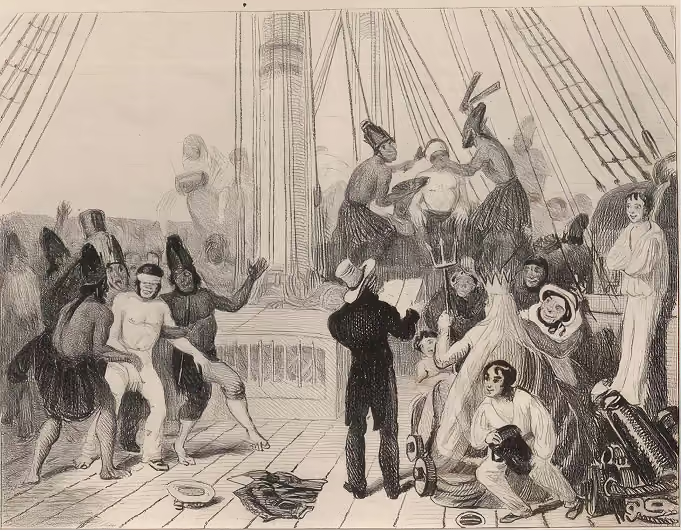
Court of King Neptune and his Consort, Amphitrite On Crossing the Equator
February 17, 1832, the Beagle crossed the equator, and Captain FitzRoy ordered the traditional firing of the ship's guns when crossing into the Southern Hemisphere. This was also the signal for all who had never crossed before, nicknamed "shellbacks" and "griffins", to be called to the court of King Neptune — Darwin included.
A ship's officer described how King Neptune and his wife Amphitrite held "court" surrounded by the most demoniacal looking beings imaginable, stripped to the waist, their bodies spotted with every color available in the ship's stores, large circles of red and yellow paint around their eyes, dancing a sort of war dance while waiting for their victims below.
Darwin was the first blindfolded griffin led up from the lower deck. Buckets of water were thrown all around, and he was placed on a plank over a large tub of water. His face was covered with pitch and paint, and on signal was tipped head first into the water and ducked by two of Neptune's constables.
Darwin's high standing on the ship would have easily exempted him from the ceremony, but instead he "readily entered into the fun."
The Fuegian Children of Tierra del Fuego
Capture of the Fuegian Children
During the Beagle's first expedition, Robert FitzRoy was promoted to captain after the suicide of the Beagle's original captain in December of 1828. Later, while surveying in Tierra del Fuego, a survey whale-boat was stolen by natives near Cape Desolation on February 5, 1829.
FitzRoy took several hostages in retaliation, all of whom escaped except for one girl (named Fuegia Basket in reference to the basket-like canoe the surveyors had used to escape), and two male children: a 20-year-old named "Boat Memory," who unfortunately died of smallpox after reaching England, and a 26-year-old named Elleparu, given the nickname "York Minster". A fourth Fuegian child, a 14-year-old boy later purchased for a pearl-inlaid button, was named "Orundellico" but nicknamed "Jemmy Button" by the crew.
Ultimately, FitzRoy abandoned the plan to retrieve the stolen whale-boat and instead decided to take the children back to England, where he planned to educate them before returning them to their people.
Fuegian Children in England
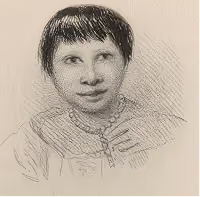
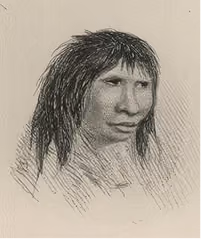
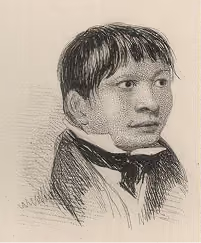
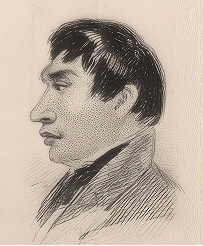
In England, the Fuegians attended St. Mary's Infant School in Walthamstow from December 1830 to October 1831, where they studied religion, English, gardening, and basic tool use.
The Fuegians could not adapt to the cultural change. York Minster struggled to settle in with younger classmates and made little progress beyond basic table manners and dressing.
After the discovery that York and Fuegia were having sex while at school, FitzRoy, worried about public reaction should Fuegia become pregnant, was determined to return the children to Tierra del Fuego. Fifteen months after bringing them to England, FitzRoy set sail again with the Fuegians back to their homeland, carrying an Anglican missionary to start a mission there to convert the other Fuegians.
Return of the Fuegian Children
On the evening of January 22, 1832, FitzRoy anchored at a quiet cove named Woolya on Navarin Island, where Jemmy and his family had lived. He ordered his men to set up a camp with armed guards, lay out two vegetable gardens and build three large huts — one to be a home for Matthews.
After an absence of several days surveying the western reaches of the Beagle Channel, FitzRoy returned in the Beagle to Woolya Cove to check on Matthews' camp. Matthews appeared and was brought on board. He was traumatized — he and the young Fuegians had been surrounded during the night, Matthews' belongings plundered, and his life threatened.
Matthews pleaded with FitzRoy to be taken to New Zealand to join his brother. Jemmy and York, when asked, were determined to remain.
Almost two years later, on January 26, 1834, after completing all hydrographic surveys on the western coast of South America, the Beagle headed south, sailing into Le Maire Strait to enter the Beagle Channel.
On March 5, the Beagle reached Woolya Cove and found it now deserted. Finally, a canoe came close, and in it was an almost unrecognizable Jemmy Button. Haggard and thin, he related how several months earlier, York Minster persuaded him and his family to accompany him and Fuegia to his own land. During the night, York deserted Jemmy and his family, taking all their clothes and tools.
The next morning, Jemmy returned to the Beagle and said farewell to the crew, and paddled his canoe away.
Final Outcome
In the early 1840s, a devout missionary, Allen Gardiner, read FitzRoy's account of Tierra del Fuego and its inhabitants. He then founded the Patagonian Missionary Society and, in 1851, subsequently perished with six companions in an ill-prepared attempt to start a mission station on Tierra del Fuego. Another attempt came in January 1855 when a second missionary vessel, the Allen Gardiner, reached Keppel Island in the Falkland Islands. There, the Patagonian Missionary Society established a station and, in November, finally sailed the Allen Gardiner into the Beagle Channel.
After locating Woolya and Jemmy Button and his family, the missionaries made several trips to the mission on Keppel Island with the Fuegians to teach them the mission requirements of church attendance and gardening. The missionaries overreacted to small thefts and would appear suddenly in their homes. These attempts failed.
On Sunday, November 6, 1859, a group of eight missionaries decided it would be feasible to hold Sunday services ashore in Woolya Cove in the hope of attracting the interest of the Fuegians. They beached their launch, walked into the new hut under construction and started singing a hymn.
A cook aboard the Allen Gardiner watched incredulously as a group of Fuegians seized the launch and stormed into the hut armed with clubs and stones.
The missionaries rushed out to find themselves in the midst of the yelling mob. All were killed.
A rescue vessel searched for the Allen Gardiner when it did not return. The cook accused Jemmy of being the ringleader, and Jemmy pleaded not guilty before a hearing back in the Falkland Islands. The judge decided the evidence from the cook was weak, the distance of sight was too great for an identification, and that any retribution against the Fuegians would be pointless.
Released from custody, Jemmy paddled away in a Fuegian canoe. He died of disease in early 1864.
Fuegia Basket had two children with York Minster, who was later killed in retaliation for murdering a man. A missionary last saw her in the western region of Tierra del Fuego in 1883 and described her as frail and unhappy, nearing the end of her life.
A street in Ushuaia, Argentina, is named after her: Fuegia Basket.
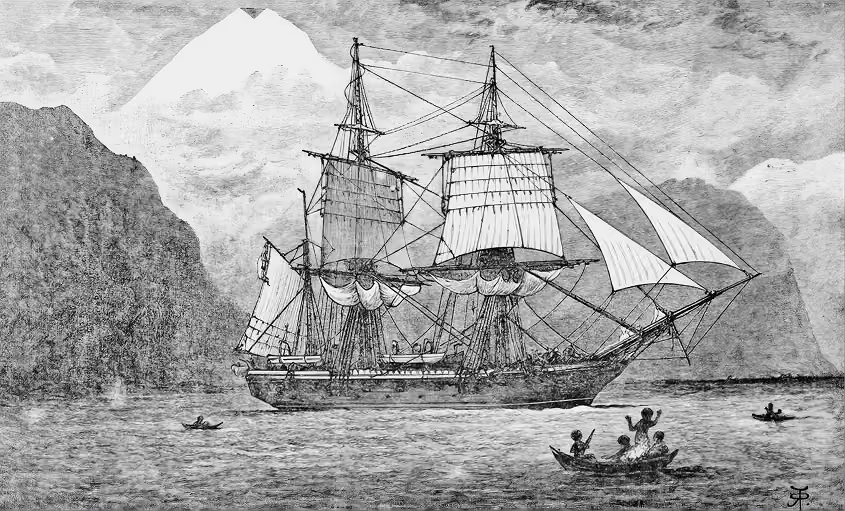
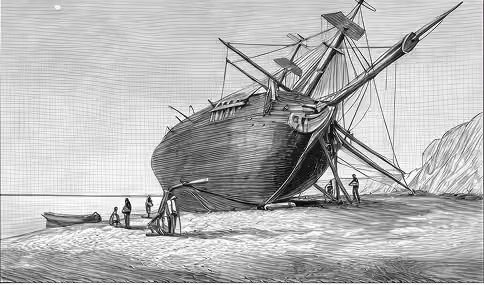
HMS Beagle, the Ship that made History
HMS Beagle was built as a 10-gun brig-sloop (three-masted sloop with square rigging) "man-of-war" for the Royal Navy at the Woolwich Dockyard on the River Thames and launched on 11 May 1820. Designed to be smaller for near-shore wartime use, she sat uneeded until she was adapted as a survey bark and completed three survey expeditions.
During the first surveying expedition in South America, Captain Pringle Stokes died by suicide after suffering extreme depression and Robert FitzRoy was given command by the Royal Navy. After returning to England, FitzRoy was ordered to prepare to return to South America and resume the interrupted hydrographic survey.
The ship was fitted out with 22 chronometers, one of the first lightning conductors installed on a ship, a raised upper deck to increase headroom below, and additional metal sheathing added to the hull. The Beagle departed on her second voyage on December 10, 1831, with Charles Darwin on board as naturalist, and reached Falmouth, England on October 2, 1836, completing a hydrographic survey around the world.
After a third voyage surveying the Australian coast, the Beagle returned to England in 1843 and was retired from service until 1845. She was then refitted as a stationary coast guard watch vessel until she was sold and broken up for timber.
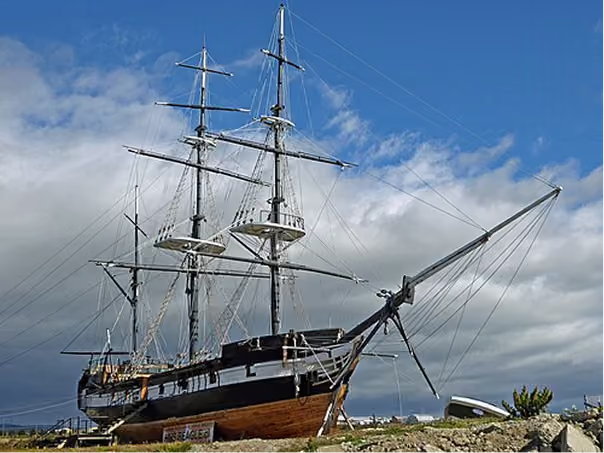
https://www.wikiwand.com/en/HMS_Beagle
Full scale replica of HMS Beagle, Nao Victoria Museum, Punta Arenas, Chile, 2018